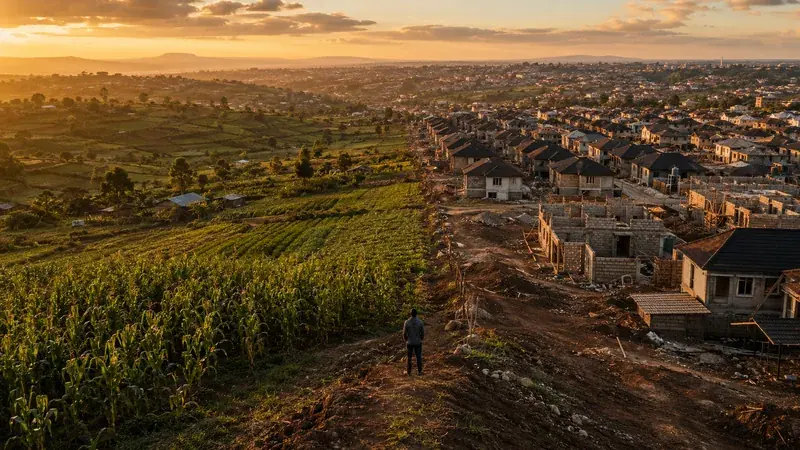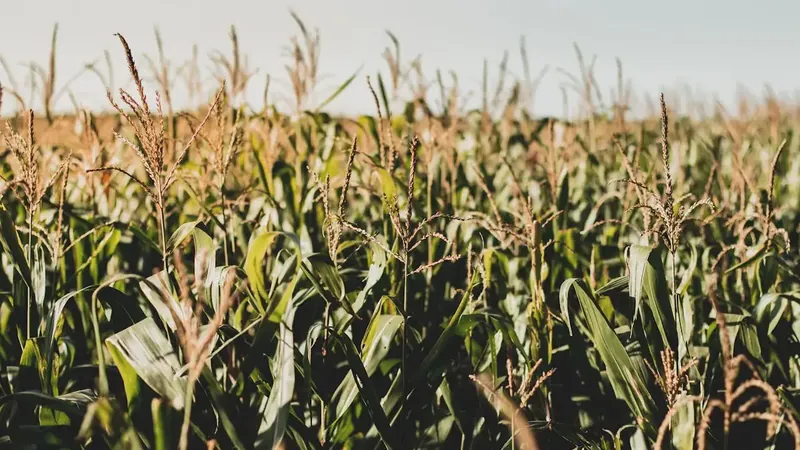
Maize is Kenya's staple food, a key income source for millions of smallholder farmers, and a critical variable in food security policy. So when senior government officials announce record harvests, people pay attention.
But good intentions and good data are two different things. And right now, Kenya's official maize production figures have a problem worth talking about openly.
Key takeaways
- The claimed 70 million bags for 2025 means 6.3 million tonnes in 90-kg bags, or just 3.5 million tonnes in 50-kg bags
- The CS's 2024 figure (67 million bags) conflicts with KNBS's official record (44.7 million 90-kg bags) under either bag size
- Without a consistent unit, programme impact claims and market decisions rest on ambiguous numbers
- The fix: standardise all official maize reporting in metric tonnes, with bag equivalents as secondary reference only
What Was Claimed
In a late 2025 public statement, Agriculture Cabinet Secretary Mutahi Kagwe announced that Kenya was on course to harvest 70 million bags of maize in 2025. He cited 67 million bags in 2024 as a baseline and pointed out that this is more than double the 34.3 million bags recorded in 2022. The Fertilizer Subsidy Programme was credited as a key driver of this growth.
That is a remarkable trajectory, if accurate. Doubling maize production in three years would represent one of the most significant agricultural turnarounds in the region's recent history. It would validate a major public expenditure programme. It would reshape how traders price grain and how millers plan procurement. It would matter enormously.
Which is exactly why the figures deserve careful scrutiny.
The Bag Problem: 50 kg or 90 kg?
Here is where things get complicated. In Kenya, "a bag of maize" is not a standardised unit. Depending on who you are talking to and which part of the value chain you are in, a bag could mean a 90-kilogram bag (the traditional standard which is common in retail and smaller-scale trade), or a 50-kilogram bag, which is used by the National Cereals and Produce Board and most large-scale grain handlers.
These are not interchangeable. The difference between them is not trivial.
If the CS's 70 million bags refers to 90-kg bags, that converts to approximately 6.3 million metric tonnes of maize. For context, that would be a genuinely extraordinary figure, well above anything Kenya has historically produced and comparable to major regional exporters. It would be, by any measure, a historic result.
If the figure refers to 50-kg bags, however, the picture changes completely. Seventy million bags at 50 kg each equals 3.5 million metric tonnes. That is a meaningful harvest, but not a historic one. It falls within the range Kenya has been operating in for years.
The same ambiguity applies to the 2024 figure of 67 million bags. Without knowing which bag size is being used, you cannot make a meaningful comparison. And that creates a real problem.
What KNBS Data Shows
The Kenya National Bureau of Statistics publishes maize production data using 90-kg bags as the standard unit. Their figures for recent years are as follows:
| Year | KNBS (90-kg bags) | Metric tonnes | 50-kg equivalent |
|---|---|---|---|
| 2022 | 34.3 million | ~3.09 million t | ~62 million bags |
| 2023 | 47.6 million | ~4.28 million t | ~85 million bags |
| 2024 | 44.7 million | ~4.02 million t | ~80 million bags |
Now compare that last figure to the CS's claim of 67 million bags for 2024. If the CS is using 90-kg bags, his figure and the KNBS figure are substantially different: 67 million versus 44.7 million. That is a gap too large to explain away by methodology or timing. If he is using 50-kg bags, then 67 million converts to about 3.35 million metric tonnes, which is actually lower than what KNBS recorded for 2024. Either way, the numbers conflict with the official statistical record.
That inconsistency matters, not as an accusation of bad faith, but as a straightforward data quality concern.
So what? If government officials and statistical agencies are working from different denominators, then every claim about programme impact becomes unreliable. You cannot measure whether the Fertilizer Subsidy Programme is working if you cannot establish a consistent, comparable baseline. And you cannot build market confidence on figures that don't reconcile with the official record.
Why This Matters Beyond the Numbers
Maize is not just a food security crop. It drives procurement decisions for large millers, pricing strategies for traders, and inventory planning for warehouse operators across the country. When production figures are announced, market participants react. Grain moves, or it doesn't. Prices adjust. Imports are planned or deferred.
If the figures are ambiguous or internally inconsistent, the downstream effects can be significant. A trader who interprets "70 million bags" as 90-kg bags and adjusts their procurement accordingly is operating on a very different assumption than one using 50-kg bags. The same announcement, interpreted differently, can lead to opposite decisions.
For those of us doing grain storage and value chain consulting, data clarity is not a technical nicety. It is a commercial and operational necessity.
What Needs to Change
The fix here is not complicated. Kenya should standardise all official maize production reporting in metric tonnes. Full stop.
Metric tonnes are unambiguous. They do not depend on bag size, regional convention, or which part of the value chain you are sitting in.
Every figure, whether from KNBS, the Ministry of Agriculture, or a Cabinet Secretary's public statement, should be expressed in metric tonnes, with any bag equivalents provided as secondary reference only, and always with the bag size explicitly stated.
This is standard practice in most major grain-producing countries and is the unit used by international bodies like the FAO and USDA in their Kenya estimates. There is no good reason for Kenya's domestic reporting to operate on a different basis.
Consistent public reporting would also make it far easier to evaluate flagship programmes like the Fertilizer Subsidy objectively, which ultimately benefits everyone, including the government. If the programme is delivering real results, clear data will show that. If it is not, clear data will show that too. Either way, informed decisions are better than well-intentioned guesses. You can read more about our work in East African grain markets and the kind of data-driven advisory we offer.
A Question Worth Sitting With
The broader issue here is not about any one announcement. It is about whether Kenya has the data infrastructure to support serious agricultural policymaking and market development. Bag sizes are almost a side issue, a symptom of a deeper need for rigour in how we collect, report, and communicate grain production data.
So here is the question worth asking: do you believe Kenya will produce 6.3 million metric tonnes of maize, the equivalent of 126 million 50-kg bags, in the 2025 harvest season? If yes, that is a number that deserves a very detailed explanation of how we got there. If not, then perhaps what we need most right now is an honest, unit-standardised conversation about what the data actually shows.
Sources
- Capital Business (Sept 2025): Maize harvest to hit 70mn bags in 2025, up from 67mn last year
- Citizen Digital: CS Kagwe says maize harvests to hit a record 70 million bags this year
- Kenya National Bureau of Statistics, Economic Survey 2025 (maize production series, 90-kg bags)
- The Standard: Maize production in 2024 drops despite Govt claims of record harvest
Put this insight to work. Talk to Kevman & Troyt about your grain operations and post-harvest strategy. Get in touch.

Operations and grain value chain specialist with more than 18 years of experience across East Africa, supporting grain handling, storage, safety, and post-harvest management.
Meet the team