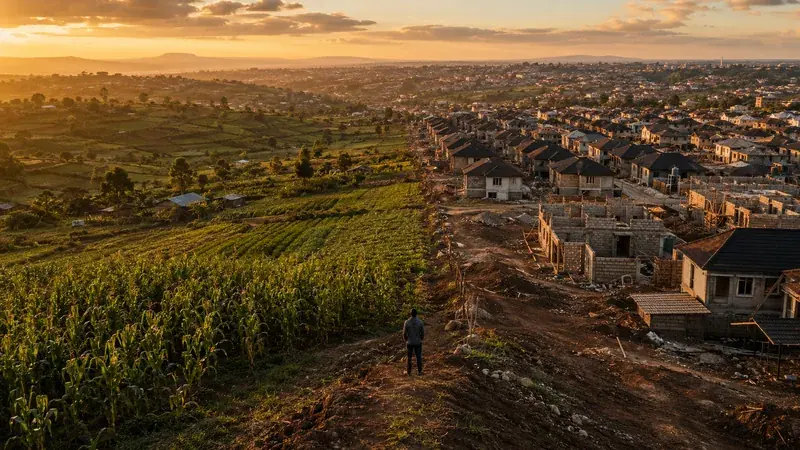
Solving food loss and waste in Africa is imperative given the population growth projections. According to the United Nations' World Population Prospects, Africa's population passed 1.5 billion in 2024 and is projected to reach nearly 2.5 billion by 2050. Food loss and waste in Africa is a pressing issue that has a detrimental effect on food quality and security.
It is estimated that 20–40% of all food produced in Africa is lost or wasted, with the majority of this loss happening post-harvest. The World Bank estimates that post-harvest losses in Sub-Saharan Africa are worth over US$4 billion a year for grains alone, enough to feed at least 48 million people. Food loss and waste not only contribute to food insecurity but also environmental degradation and greenhouse gas emissions.
Causes of Food Loss and Waste
One of the primary causes of food loss and waste in Africa is inadequate infrastructure for transportation and storage. Many areas lack the necessary roads, storage facilities, and refrigeration to safely transport and store food, resulting in spoilage and waste.
Another significant cause is limited market access for smallholder farmers. Many farmers in Africa lack access to markets to sell their produce, leading to surplus food going to waste. Furthermore, the lack of standardisation in the region makes it challenging for smallholder farmers to compete with larger commercial farmers.
Solutions and the Way Forward
To effectively address these issues, a multi-stakeholder and multi-disciplinary approach is needed. Solutions include investing in infrastructure development for transportation and storage and providing smallholder farmers with technology and resources for record-keeping and market access. The government can also invest in standardisation and market access for smallholder farmers to increase their chances of success.
In addition to the suggested solutions, other innovative and uncommon solutions that can be implemented include:
1. Precision Agriculture Technology
Investing in precision agriculture technology, such as sensors and drones, can improve crop yields and reduce food loss due to pests and diseases. Precision agriculture involves the use of advanced technologies such as sensors, cameras, and drones to collect data on crop growth, soil health, and weather conditions. This data can then be used to optimise planting and harvesting schedules, reduce the use of pesticides and fertilisers, and improve crop yields. Additionally, the use of drones can be used to monitor crops for pests and diseases, thus reducing food loss due to these factors.
2. Sustainable Packaging Materials
Encouraging the use of sustainable packaging materials to prolong the shelf life of food products and reduce waste. Sustainable packaging materials, such as bioplastics, can help to prolong the shelf life of food products, reducing spoilage and waste. By using sustainable packaging materials, it can also reduce the environmental impact of packaging and disposal.
3. Local Food Processing and Packaging Facilities
Building local food processing and packaging facilities can reduce the need for long-distance transportation and therefore reduce spoilage. Additionally, local food processing and packaging facilities can create jobs and boost the local economy.
4. Community Supported Agriculture (CSA) Programmes
Developing and promoting Community Supported Agriculture programmes to link smallholder farmers directly with consumers, reducing the need for intermediaries and increasing farmers' revenues. CSA programmes allow consumers to purchase shares in a local farm, and in return, receive a regular supply of fresh produce. By connecting smallholder farmers directly with consumers, CSA programmes can reduce the need for intermediaries, such as wholesalers, and increase farmers' revenues.
5. Regenerative and Conservation Farming Practices
Conservation and regenerative farming practices can be a solution to food waste and loss in Africa, as they improve soil health, increase crop yields, and reduce the use of synthetic chemicals. These practices include no-till farming, cover cropping, crop rotation, agroforestry, and integrated pest management. They increase resilience to pests, diseases, and weather variability, and improve farmers' livelihoods. However, they require proper support and resources to be implemented effectively.
Conclusion
All these solutions have the potential to reduce food waste and loss and improve food security, but they require investment and support from the government, private sector, and civil society. Each one of them can have a significant impact on the food system, but it is important to evaluate the feasibility, scalability, and sustainability of each one of them.
Sources
- United Nations DESA, World Population Prospects (Africa projections)
- World Bank: Is Post-Harvest Loss Significant in Sub-Saharan Africa?
- FAO, SDG indicator 12.3.1: Global food losses
Want to understand the broader challenges affecting the grain value chain? Read our post on navigating through COVID-19, Russia War, and Drought.